
Federal Department of Economic Affairs, Education and Research EAER
The EAER is where the federal government’s expertise on economic affairs and trade policy is concentrated. You can follow our strategy for employment, growth and prosperity in Switzerland and for securing sustainable development. Furthermore, the EAER combines education, research and innovation – three areas that are crucial for our society and for Switzerland’s economic performance.

Press releases
Consumer sentiment lower than a year ago
In March 2026 the consumer sentiment index stood at –43 points. This is 8 points lower than in March 2025. The following sub-indices are lower than in March 2025: economic outlook, financial outlook and moment to make major purchases. The following sub-index has barely changed compared to March 2025: past financial situation.
Safe and Sustainable by Design: Why safe and sustainable innovations pay off for companies
Developing new materials and products that are harmless to both humans and the environment requires holistic approaches such as Safe and Sustainable by Design (SSbD). But how much effort does it take for companies to meet the associated requirements? A new Empa analysis now shows that many of these are already laid down in key EU legislation. Consistently implemented, SSbD thus helps companies to ensure regulatory compliance for innovations at an early stage, thereby avoiding costly missteps.
SECO: Ordinance on Measures Relating to the Situation in Ukraine
On 31.03.2026 the Federal Department of Economic Affairs EAER has amended annex 8 to the ordinance. In this process, 9 individuals were added to the annex and the entries of 132 individuals and 77 organizations were modified. The measures come into force at 11 pm on 1.04.2026.
US investigations into trading practices
At its meeting on 1 April, the Federal Council discussed the Section 301 investigations directed against Switzerland as well as other countries by the United States. The underlying allegations relate to alleged excess capacity and production in manufacturing sectors, as well as measures which the US may consider insufficient to restrict the importation of goods produced with forced labour. The Federal Council rejects these allegations. Switzerland intends to present its views as part of the relevant US proceedings.
Statement establishing a Dialogue on Emerging Agricultural Trade Issues
Australia, Brazil, Canada, Colombia, Costa Rica, Iceland, Liechtenstein, New Zealand, Peru, Switzerland, Ukraine and Uruguay established a Statement on a Dialogue on Emerging Agricultural Trade Issues at the 14th Ministerial Conference (MC14) of the World Trade Organization in Yaoundé, Cameroon. The Statement establishes a forum that is expected to build trust and foster mutual understanding of the challenges and opportunities associated with sustainable agriculture, taking into account the diverse realities and approaches of WTO Members. It sends a strong signal that Members are willing to find new ways of engaging on issues of common concern.
Sanctions: Ordinance on measures against persons, groups, undertakings and entities associated with ISIL (Da'esh) and Al-Qaida
The UN sanctions committee has amended the list of sanctioned individuals, companies and organizations. The SESAM database has been updated accordingly. On 4 March 2016 the Federal Council has adopted the Ordinance on the automatic application of the UN Security Council’s sanctions lists. Hence, the amendments of the UN Security Council’s sanctions lists enter into force in Switzerland without delay.
President of the Swiss Confederation
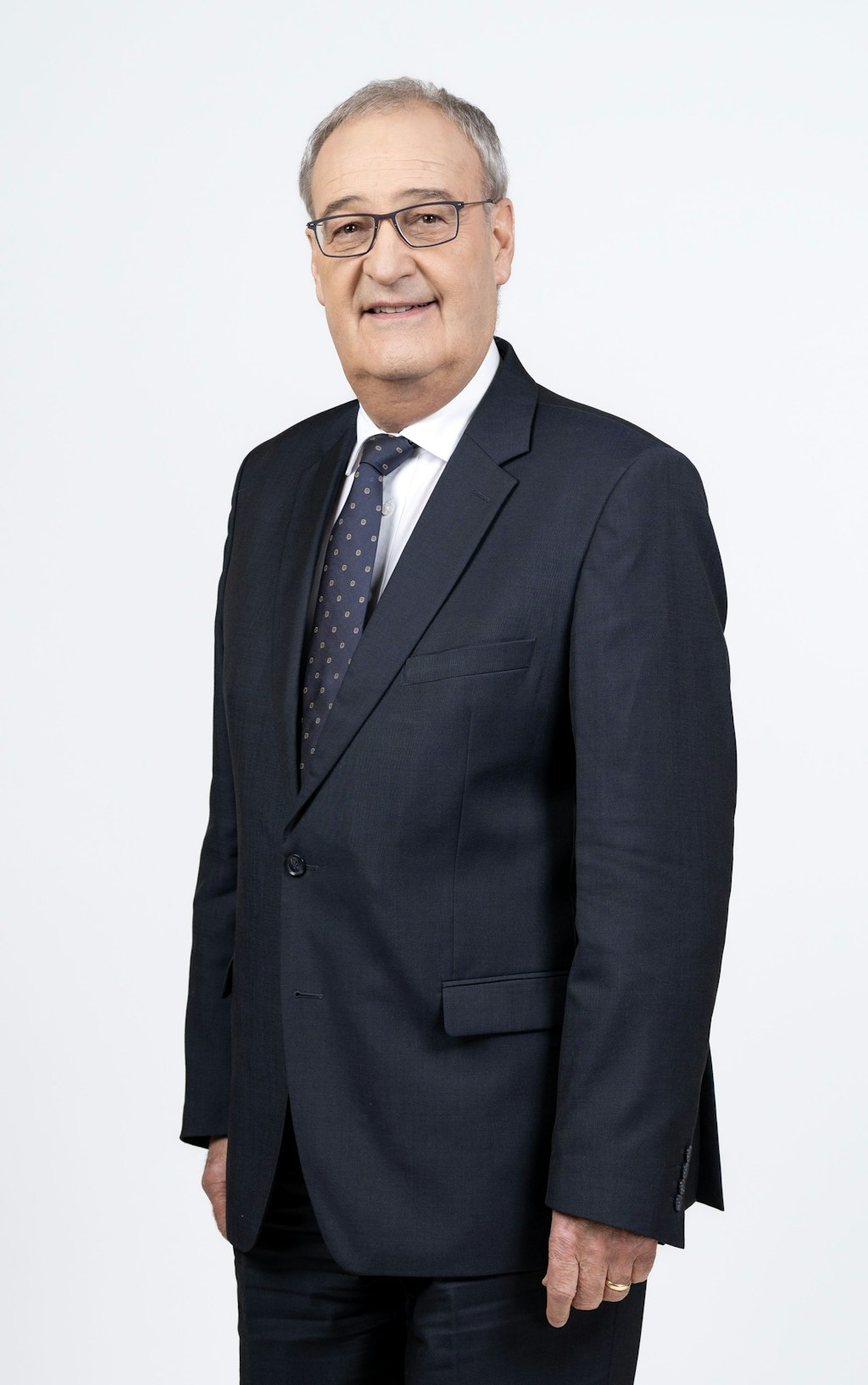
"Welcome to the Federal Department of Economic Affairs, Education and Research"
Guy Parmelin,
President of the Swiss Confederation
Agencies
Federal Consumer Affairs Bureau FCAB
Innosuisse - Swiss Innovation Agency
Swiss Federal University for Vocational Education and Training SFIVET
Information Service Center EAER ISCeco
Services
Offices
State Secretariat for Economic Affairs SECO
State Secretariat for Education, Research and Innovation SERI
Federal Office for Agriculture FOAG
Federal Office for National Economic Supply FONES
Federal Office for Housing FOH
Federal Office for Civilian Service CIVI
Subscribing to News
Keep track of news from the EAER and its offices and agencies.
By subscribing to news you will receive the latest updates from the EAER.